
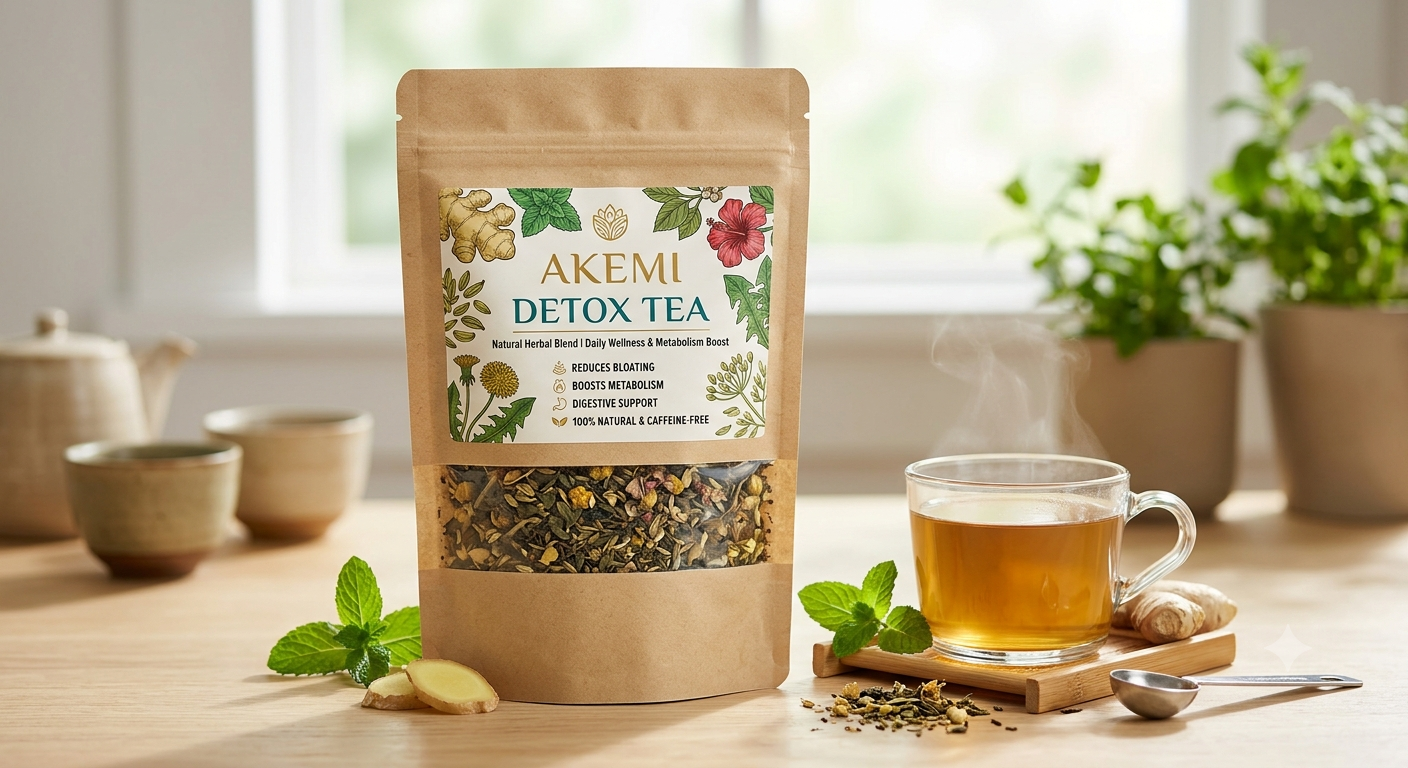
Not every cup of tea has to be just a cup of tea. This Botanical Akemi Detox Tea brings together twelve plants that people across Asia, South America and Europe have leaned on for centuries.
Three true teas (Matcha, Sencha and Oolong), three natural energisers (Guarana, Yerba Mate and Ginseng), four cleansing herbs (Dandelion Leaf, Nettle Leaf, Lemongrass and Milk Thistle), plus antioxidant-rich Goji Berries and a whisper of Stevia Leaf Extract for sweetness without sugar.
The Result: a bright, grassy, faintly citrus brew with a clean finish and no bitter aftertaste.
Every batch of Akemi Detox Tea is vegan, gluten-free, dairy-free, soy-free and non-GMO, with no laxatives, no senna, no artificial flavours and no added sugar.
It is designed for people who want their daily drink to do a little more — steady energy in the morning, comfortable digestion through the day, and gentle support for a body that is already very good at cleaning itself.
What are the Key Benefits of Akemi Detox Tea?
- Clean, steady energy — caffeine from tea, guarana and yerba mate, softened by L-theanine in green tea for focus without the jittery spike-and-crash.
- Supports fat burning during exercise — catechins and caffeine together have been shown to nudge fat oxidation upward.
- Rich in antioxidants — EGCG, chlorogenic acid, silymarin, zeaxanthin and citral all help neutralise free radicals.
- Gentle diuretic action — dandelion and nettle encourage fluid release, which can ease that puffy, water-heavy feeling.
- Digestive comfort — lemongrass is traditionally used to calm bloating, gas and cramping.
- Liver-friendly botanicals — milk thistle’s silymarin is one of the most studied plant compounds for liver support.
- Naturally sweet, zero sugar — stevia leaf extract sweetens without calories or a blood-sugar spike.
- Appetite support — a warm, satisfying drink between meals can take the edge off mindless snacking.
- Clean label — vegan, gluten-free, dairy-free, soy-free, non-GMO.
What Each Ingredient of Akemi Detox Tea Brings
-
Matcha and Sencha (Green Tea)
A meta-analysis in overweight and obese adults found catechin supplementation reduced waist circumference and triglycerides while modestly raising HDL cholesterol.
Matcha also delivers L-theanine, the amino acid behind green tea’s calm alertness.
-
Oolong
In a controlled 14-day crossover trial, oolong tea raised fat oxidation by roughly 20% — and unlike plain caffeine, its effect carried on during sleep.
-
Guarana
Amazonian seed with one of the highest natural caffeine contents of any plant – supports alertness, reaction time and exercise performance, and mildly increases energy expenditure.
-
Yerba Mate
A South American staple rich in caffeine and chlorogenic acids- this supplementation significantly reduced body fat mass, percent body fat and waist-to-hip ratio, with no meaningful safety concerns.
-
Ginseng
Panax ginseng contains ginsenosides which reduced fatigue and improved antioxidant markers.
-
Dandelion Leaf
The French name for dandelion, pissenlit, – a fresh leaf extract significantly increased urination frequency in the hours after dosing. It can make you feel less bloated and lighter.
-
Nettle Leaf
A quietly nutritious herb carrying vitamins A, C and K, plus calcium, iron and potassium. Traditionally used as a mild diuretic, its potassium content and phenolic compounds are thought to work together on fluid balance. It also has mild anti-inflammatory properties.
-
Lemongrass
Caffeine-free and full of citral, chlorogenic acid, isoorientin and swertiajaponin. Traditionally used for indigestion, bloating and stomach cramps, and anti-inflammatory activity.
-
Milk Thistle
The seeds yield silymarin — a mix of silybin, isosilybin, silydianin and silychristin with antioxidant, anti-inflammatory and antifibrotic properties.
-
Goji Berries
The richest known food source of zeaxanthin- a powerful antioxidant that concentrates in the macula of the human eye to protect vision. Goji also supplies vitamin C, potassium, and antioxidant depth.
-
Stevia Leaf Extract
but contains zero calories. It helps manage blood sugar, supports weight loss, and protects teeth from cavities without the health risks of refined sugar.
What are theSide Effects and Adverse Reactions?
Most healthy adults tolerate this blend well, but it is a caffeinated, botanically active drink and deserves respect.
- Caffeine-related. Too much can cause insomnia, jitteriness, a racing heart, headaches, anxiety, nausea or reflux.
- Fluid and mineral balance. Dandelion and nettle both increase urination. Overdoing it can leave you dehydrated or low on electrolytes. Don’t drink it close to bedtime unless you enjoy 3 a.m. bathroom trips.
- Digestive upset. Milk thistle occasionally causes nausea, bloating, loose stools or heartburn.
- Allergies. Dandelion and milk thistle are in the daisy/ragweed family. If you react to ragweed, chrysanthemums or marigolds, be cautious.
- Ginseng. Combining ginseng with caffeine may raise blood pressure in some people.
Stop drinking it and seek medical advice if you get hives, swelling, difficulty breathing, chest pain, unusual bruising or bleeding, or a persistent racing heartbeat.
Who Akemi Detox Tea Is For?
Akemi Detox Tea is a good fit for:
- Healthy adults 18 and over who want a cleaner alternative to sugary energy drinks;
- People wanting a warm, zero-calorie drink to support a weight-management routine that already includes food and movement changes;
- Vegans and anyone managing gluten, dairy or soy sensitivities; and people who like their antioxidants to come from actual plants.
Not suitable for:
- Anyone pregnant or breastfeeding;
- Children and teenagers under 18;
- Anyone with a heart condition, high or unstable blood pressure, kidney or liver disease, a bleeding disorder, or an anxiety or sleep disorder;
- People taking anticoagulants, blood pressure medication, diabetes medication or immunosuppressants;
- Anyone with a diagnosed or suspected eating disorder. If you’re unsure, ask your doctor first — that isn’t a legal formality, it’s the sensible move.
How to Store Akemi Detox Tea
- Keep the pouch or tin tightly sealed in a cool, dry, dark cupboard, ideally 15–25°C.
- Green tea and matcha are the fragile parts of this blend — light, heat, air and moisture strip out both the catechins and the flavour.
- Never store it above the stove, on a sunny windowsill or beside spices.
- Always use a dry spoon; a wet one invites mould.
- Unopened, the pack keeps about 18–24 months; once opened, finish it within 4–6 months for peak taste.
- Don’t refrigerate — condensation does more harm than the cold does good.
How Much to Drink and How to Brew
- Standard serving: 1 teaspoon (roughly 2–2.5 g) of loose blend, or one tea bag, per 200–250 ml of water.
- Water temperature: 80–85°C, not boiling. Boiling water scorches green tea and pulls out harsh tannins.
- Steep time: 3–4 minutes. Longer makes it bitter, not stronger in any useful way.
- Daily dose: Start with one cup a day for the first three to five days to see how you respond. Most people settle at 1–2 cups daily. Do not exceed 3 cups in 24 hours.
- Best timing: Morning or early afternoon — ideally 30–45 minutes after breakfast or lunch. Avoid drinking it within 6–8 hours of bedtime, and go easy on an empty stomach if you’re caffeine-sensitive. Because tannins can reduce iron absorption, leave a gap of about an hour around iron-rich meals or iron supplements.
- A realistic cycle: 4–6 weeks of daily use, then a week off. Not strictly necessary, but a break helps you judge whether the tea is doing anything for you and keeps caffeine tolerance in check.


Reviews
There are no reviews yet.